Porcelain vs Concrete Pavers for Rooftop Decks: Cost, Weight and Long-Term ROI
Article Sections
Table of Contents
-
Introduction: Redefining Value in Rooftop and Decking Materials
- Looking Beyond Upfront Cost
- Total Cost of Ownership and Long-Term ROI
- Choosing Between Porcelain and Concrete Pavers
- The short version
-
Concrete Pavers: The Traditional High-Utility Standard
- Initial Cost Efficiency
- Structural Density and Strength
- Aesthetic Variety
- SkyDeck Specification Quality
- The downsides of concrete pavers
-
Porcelain Pavers: Gaining Popularity
- Impermeability and Freeze-Thaw Resistance
- Stain and Chemical Resistance
- Weight Advantages
- Fade Resistance
- The downsides of porcelain pavers
-
Maintenance and Operational Expense Comparison
- Concrete Maintenance Requirements
- Porcelain’s Low-Absorption Advantage
- Repair Simplicity with the SkyJack Pedestal System
-
Installation Efficiency and Labor Impact
- Faster Handling with Porcelain
- Cutting and Precision
- Universal Pedestal Compatibility
-
Environmental and Safety ROI
- Slip Resistance
- Thermal Performance
- Sustainability and Longevity
-
SkyDeck USA’s Strategic Consultation Services
- Material Mapping and Project Planning
- Technical Specifications and SRI Data
- System Longevity Assurance
-
Conclusion: Making the Data-Driven Choice
- Comparing the Real-World Tradeoffs
- Selecting the Right Material for the Project
- Requesting Samples and ROI Guidance
- Frequently Asked Questions About Porcelain and Concrete Pavers
I. Introduction: Redefining Value in Rooftop and Decking Materials
When property owners evaluate rooftop decking materials, the conversation usually starts with upfront cost.
But smart long-term investment decisions are about much more than initial procurement pricing.
The real question is:
What will this system cost to own, maintain, repair, and replace over the next 20 to 30 years?
That’s where total cost of ownership becomes more important than day-one material pricing.
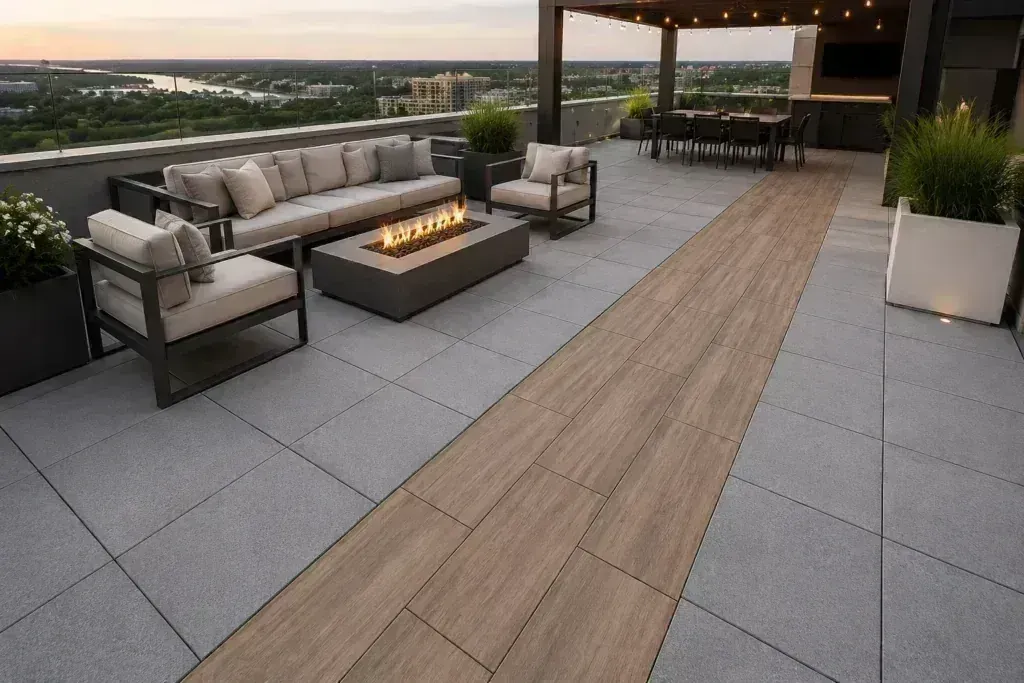
Skydeck USA offers both premium porcelain pavers and high-quality concrete pavers for elevated pedestal deck systems. Each material has strengths depending on the project goals, budget, climate, and long-term maintenance expectations.
The right material choice can impact:
- Maintenance costs
- Labor expenses
- Structural requirements
- Property appearance
- Long-term building value
- Lifecycle replacement costs
Understanding those differences helps property owners make smarter ROI-driven decisions.
The short version
Concrete costs less up front and takes more abuse. Porcelain weighs less than half as much, holds its color longer and resists stains, and costs more per square foot. On a roof that can carry the weight, either works. On a roof that cannot, porcelain is the answer. Most of the long-term cost is in the roof, the pedestals and the labor, not the paver. The right pick is the one that fits the structure and the use.
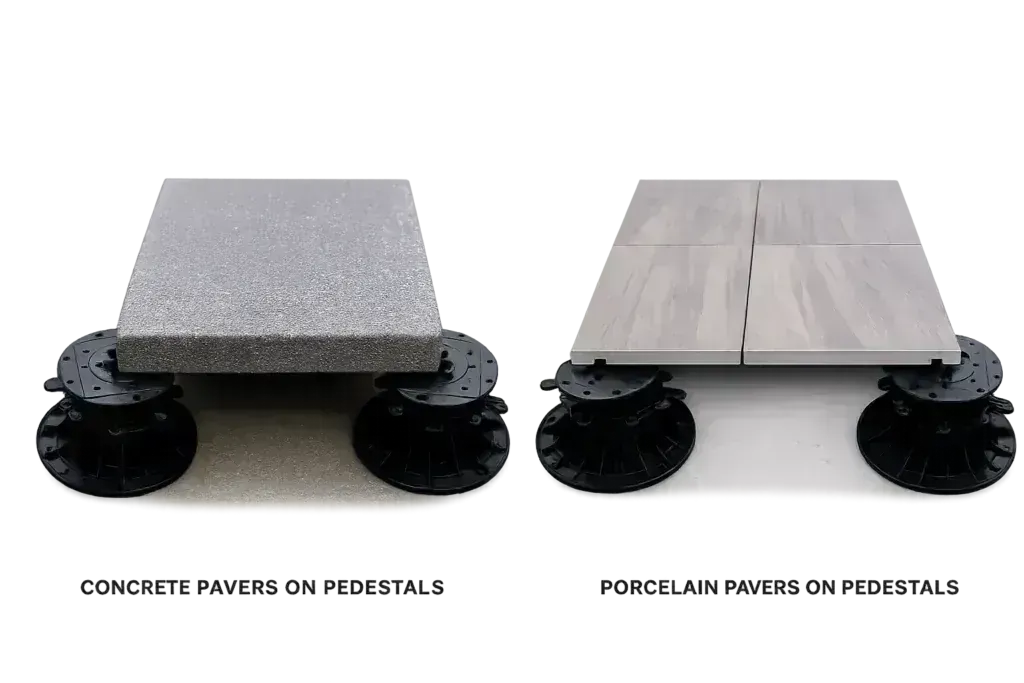
| Concrete pavers | Porcelain pavers | |
|---|---|---|
| Upfront cost | Lower | Higher |
| Weight | About 22 lb per square foot | About 9 lb per square foot |
| Water absorption | Under 5 percent | Under 0.05 percent |
| Freeze-thaw | Good, with the right blend | Excellent |
| Cracking from impact | Rare | More likely; keep spares |
| Support on pedestals | Sits on four corners | Needs safety backing, a tray or a grate (SkyDeck's ships with the backing adhered) |
| Cutting on site | Fast, common tools | Slow, porcelain blade |
| Stains and cleaning | Textured surface hides grime; oil and rust can soak in | Nothing soaks in; shows dust and footprints; neutral cleaner only |
| Color over 20 years | Some fading | Very little |
| Range of looks | Wide, in solid tones and textures | Widest, including stone and wood looks |
| Best for | Heavy use, tight budgets, roofs with capacity | Weight limits, design-led projects, stain-prone uses |
II. Concrete Pavers: The Traditional High-Utility Standard
Concrete pavers have been a trusted rooftop and deck surface material for decades.
They remain a strong choice for many commercial and residential projects, especially when durability and budget are major priorities.
Initial Cost Efficiency
One of concrete’s biggest advantages is cost.
Concrete pavers typically offer a lower entry price point than porcelain, making them attractive for:
- Large rooftop decks
- Multifamily developments
- Commercial amenity spaces
- Budget-sensitive projects
For projects with large square footage, those upfront savings can be significant.
Structural Density and Strength
Concrete pavers offer high compressive strength and excellent load-bearing performance.
They perform well under:
- Heavy foot traffic
- Outdoor furniture
- Rooftop gathering areas
- Commercial-use environments
Their density and strength make them a reliable long-term surface option.
Aesthetic Variety
Modern concrete pavers are available in a wide range of:
- Colors
- Textures
- Finishes
- Architectural styles
This makes them a versatile option for projects that want a more traditional or natural appearance.
SkyDeck Specification Quality
Not all concrete pavers are designed for pedestal systems.
SkyDeck USA utilizes high-quality concrete blends specifically selected for elevated pedestal applications, including pressed concrete pavers with less than 5% water absorption.
This helps ensure long-term rooftop performance, durability, and resistance to environmental exposure.
The downsides of concrete pavers
Concrete is the workhorse of rooftop decks, and it is the right call for most of them. It is not the right call for every one.
It is heavy. At about 22 pounds per square foot, concrete is the first thing a structural engineer asks about. On an older roof or a long span it can be the reason the project changes material, or does not happen. Porcelain comes in at less than half the weight.
It absorbs water. Under 5 percent absorption is good for concrete, but it is not zero. Water that gets in can freeze, and over many winters that is where surface spalling starts. Porcelain, at under 0.05 percent, does not have this problem.
It stains. The same open surface that hides everyday grime also takes in oil, rust from furniture feet and tannins from leaves. Some of that comes out with a pressure wash. Some of it does not.
It fades. Pigment in concrete sits in the mix and takes sun for twenty years. Expect darker colors to soften. Porcelain's color is fired in and barely moves.
It can show efflorescence. The white haze on new concrete is efflorescence: water dissolves salts inside the paver and carries them to the surface. It washes off and goes away over time. How long depends on weather and moisture, and it surprises owners who were not warned.
It is thicker. A 2 inch concrete paver takes an inch more height at the door threshold than 2 cm porcelain. On a tight threshold that inch matters.
If the roof has the capacity and the deck will see hard use, concrete is still the better value. If weight, staining or color matter more, porcelain earns its price.
III. Porcelain Pavers: Gaining Popularity
While concrete remains a proven option, porcelain has become a popular option for many modern rooftop projects.
The long-term durability advantages are difficult to ignore.
Impermeability
One of porcelain’s biggest advantages is its extremely low water absorption rate—typically less than 0.05%.
That means:
- Water cannot penetrate the surface
- Freeze-thaw cracking is dramatically reduced
- Internal deterioration is minimized
This makes porcelain valuable in colder climates with repeated freeze-thaw cycles. Skydeck’s pressed concrete pavers also perform extremely well in harsh winter climates due to their low water absorption although not quite as low as porcelain pavers.
Stain and Chemical Resistance
Porcelain is highly resistant to:
- Oil stains
- Mold and mildew
- Environmental pollutants
This is particularly important in dense urban environments where rooftop surfaces experience constant exposure to dirt, debris, food spills, and pollution.
Although porcelain can be sensitive to harsh chemicals or cleaners. So, be sure to use cleaning products specifically made for porcelain pavers.
Weight Advantages
Porcelain pavers are significantly lighter than concrete, averaging approximately 9 lbs per square foot versus 22 lbs per square foot.
That lower weight can provide major advantages:
- Reduced structural load requirements
- Easier rooftop transportation
- Faster installation
- Lower labor strain during installation
For rooftop projects, weight matters—and porcelain can create meaningful efficiencies.
Fade Resistance
Porcelain and pressed concrete pavers are highly UV-stable although porcelain has a slightly higher color stability over decades, helping preserve the visual appearance and perceived value of the property long-term.
The downsides of porcelain pavers
Porcelain is the right call for a lot of rooftops. It is not the right call for every one.
It cracks more easily. Porcelain is hard but thin, about 2 cm. A dropped tool or a heavy planter edge can crack a paver that concrete would shrug off. On a pedestal deck you replace the one paver, but you need spares on hand, and dye lots change between runs.
It needs support underneath. A 2 cm porcelain paver cannot sit on four pedestal corners alone. It needs a tray, a grate, or a bonded safety backing. That adds cost and labor on most systems. SkyDeck porcelain ships with the safety backing already adhered, so that extra labor is gone, but plan for it with other brands.
It costs more up front. Concrete has the lower entry price. Porcelain earns it back over the life of the deck through lower maintenance and lower weight, but the first invoice is higher. Porcelain has a long life expectancy and more aesthetic options, and that comes at a premium.
It shows dirt. The same dense surface that resists stains also shows pollen, dust and footprints, especially on light, smooth finishes. Expect to rinse and scrub it more often than textured concrete.
It is slower to cut. Porcelain chips at the edges if you rush it. Field cuts take a wet saw, a porcelain blade, and patience. Concrete cuts fast with common tools.
It is sensitive to harsh cleaners. Acid-based and abrasive cleaners can dull the surface and cause pitting. Use a neutral cleaner.
If your deck sees heavy equipment, a lot of field cuts, or a tight budget, concrete is the safer pick. If weight, freeze-thaw, or design range matters more, porcelain wins, and the safety backing removes its biggest installation headache.
IV. Maintenance and Operational Expense Comparison
Maintenance costs play a major role in long-term ROI.
This is where the differences between porcelain and concrete become more nuanced.
Concrete Maintenance Requirements
Skydeck USA’s pressed concrete pavers feature less than 5% water absorption, making them significantly more durable and lower maintenance than many standard concrete products.
Their textured surfaces and natural variation also tend to visually hide everyday dirt, dust, and rooftop debris more effectively between cleanings.
For many projects, this helps reduce the appearance of wear over time.
Porcelain’s Low-Absorption Advantage
Porcelain offers major long-term advantages because of its near-zero water absorption and high resistance to internal cracking, freeze-thaw damage, and chemical staining.
However, in real-world rooftop environments, porcelain surfaces can sometimes show dirt, dust, pollen, and surface residue more visibly than concrete pavers—especially on lighter colors and smoother finishes.
As a result, porcelain pavers may require more frequent surface cleaning to maintain a pristine appearance.
Porcelain pavers also have a slightly higher propensity for cracking compared to concrete pavers, which is why tray systems, fiberglass grates, or safety backing systems are often recommended underneath the pavers for additional support and fall protection.
While porcelain performs extremely well long-term, individual units may require replacement more frequently than concrete in certain high-impact or high-traffic applications.
The right choice often depends on the priorities of the project:
- Porcelain for ultra-low absorption, modern aesthetics, lighter weight, and long-term color stability
- Concrete for durability, value, impact resistance, and lower day-to-day visual maintenance visibility
Repair Simplicity with the SkyJack Pedestal System
Both porcelain and concrete benefit from the SkyJack pedestal system’s repair accessibility.
If a paver becomes damaged, individual units can be removed and replaced without disturbing the surrounding deck.
That makes repairs faster, cleaner, and far less labor-intensive than traditional adhered systems.
But, concrete wins out in this category since porcelain tends to crack more easily. When ordering porcelain pavers, it’s important to keep extras on hand after the installation because dye lots can vary when replacing individual pavers in the future.
V. Installation Efficiency and Labor Impact
Installation labor is another major factor in ROI.
Faster Handling with Porcelain
Because porcelain is lighter than concrete, installers can move materials more quickly. But, since porcelain requires a grate system or trays underneath, that can require double the labor. Using Skydeck’s porcelain pavers with pre-installed safety backing speeds up installation making porcelain faster and easier to install as compared to competitor systems.
That improves:
- On-site productivity
- Crew efficiency
- Material staging speed
- Installer fatigue reduction
Over large projects, these labor savings become significant.
Cutting and Precision
Concrete and porcelain each require different cutting methods and tools.
Concrete is generally thicker and denser, but cuts can be made quickly with a wet table saw, chop saw or even a grinder.
Porcelain chips easily during cutting so they must be cut more slowly and precisely.
Universal Pedestal Compatibility
Both porcelain and concrete work seamlessly with Skydeck USA’s SkyJack pedestal system.
The fully adjustable “Twist-to-Adjust” pedestal system supports multiple paver thicknesses while maintaining fast installation speeds and long-term stability.
Combined with Skydeck USA’s detailed shop drawings and mapped pedestal heights, installers can move efficiently across the roof without guesswork or unnecessary adjustments.
VI. Environmental and Safety ROI
Material selection also affects environmental performance and rooftop safety.
Slip Resistance
Both porcelain and concrete pavers are available with high-friction surfaces designed to maintain slip resistance in wet conditions.
This helps projects meet safety requirements while improving rooftop usability.
Thermal Performance
Lighter-colored porcelain or concrete pavers can help keep rooftop surfaces and the building below significantly cooler by reflecting more solar heat instead of absorbing it. This reduction in heat transfer can help lower rooftop temperatures, reduce HVAC workload, improve occupant comfort, and decrease long-term energy costs—especially during hot summer months and in dense urban environments where heat buildup is more extreme.
Sustainability and Longevity
Porcelain and concrete pavers both have a long lifespan, lasting 30 plus years with proper maintenance.
That means:
- Less material waste
- Lower landfill contribution
- Reduced lifecycle material consumption
Long-lasting materials are often the most sustainable materials.
VII. Skydeck USA’s Strategic Consultation Services
Choosing the right rooftop material is not a one-size-fits-all decision.
Material Mapping and Project Planning
Skydeck USA can help property owners evaluate:
- Climate exposure
- Foot traffic levels
- Rooftop usage goals
- Maintenance expectations
This helps ensure the right material is selected for the specific project.
Technical Specifications and SRI Data
Skydeck USA provides technical product information including:
- Load-bearing data
- Surface performance characteristics
- Solar Reflectance Index (SRI) ratings
- Material specifications
This allows architects, contractors, and property owners to make informed decisions based on long-term performance goals.
System Longevity Assurance
The surface material is only part of the system.
Skydeck USA helps ensure the pedestal foundation is designed to support the long-term lifespan of both porcelain and concrete rooftop assemblies.
Combined with detailed pedestal layout drawings and installation planning, the entire rooftop system is designed for durability and long-term performance.
VIII. Conclusion: Making the Data-Driven Choice
Both porcelain and concrete pavers can be excellent rooftop solutions when paired with the right pedestal system. The best choice depends on the goals of the project.
Concrete pavers are durable, cost-effective, impact-resistant, and often better at hiding everyday dirt and wear. With low water absorption and strong freeze-thaw performance, they perform well in both hot and cold climates.
Porcelain’s biggest advantage is design flexibility. It offers a wider variety of colors, textures, and modern finishes. Porcelain is also lighter on its own, although the required tray or grate support system may reduce some of that weight advantage.
Both materials have tradeoffs. Porcelain may show dirt more easily and has a slightly higher risk of cracking, while concrete is heavier but often more forgiving in real-world rooftop conditions.
The smartest choice comes down to the project’s:
- Budget
- Design goals
- Structural requirements
- Maintenance expectations
- Long-term use
Visit SkyDeckUSA.com to request material samples, technical specifications, and project-specific ROI guidance.
For a step-by-step look at how either one gets installed, see how to build a deck over a flat roof; for wood instead of stone, see the ipe deck tiles buying guide.
Frequently Asked Questions About Porcelain and Concrete Pavers
Which is better for a rooftop deck, porcelain or concrete pavers?
Neither is better everywhere. Concrete wins on upfront cost and toughness. Porcelain wins on weight, stain resistance and color. The roof's load capacity usually decides first; the budget and the use decide the rest.
How much heavier is concrete than porcelain?
About 22 pounds per square foot for concrete against about 9 for porcelain on a pedestal deck. That difference is often what lets a porcelain deck go on a roof that could not take concrete.
Do porcelain pavers crack more than concrete?
Yes. Porcelain is harder but thinner, so a dropped tool or a planter edge can crack one. On a pedestal deck you lift and replace the single paver, which is why keeping a few spares from the same run matters.
Which costs more to maintain?
Close to even, in different ways. Concrete needs the occasional pressure wash and can hold stains. Porcelain needs more frequent rinsing because it shows dust, but nothing soaks in. Concrete does not need sealing for performance, and unsealed pavers are less upkeep: once sealed, they need resealing on a schedule. SkyDeck recommends sealing only in stain-prone spots such as outdoor kitchens and bars, after any efflorescence has gone and the pavers are clean and dry, with a breathable sealer. Porcelain never needs it.
Can I use both on one roof?
Yes. Both sit on the same SkyJack pedestal grid. Many roofs put porcelain where people sit and look, and concrete where carts roll and planters stand. The pedestal heights differ between the two thicknesses, so the layout shows which goes where.